
How to Clean Car Windows Without Streaks: A Practical Guide
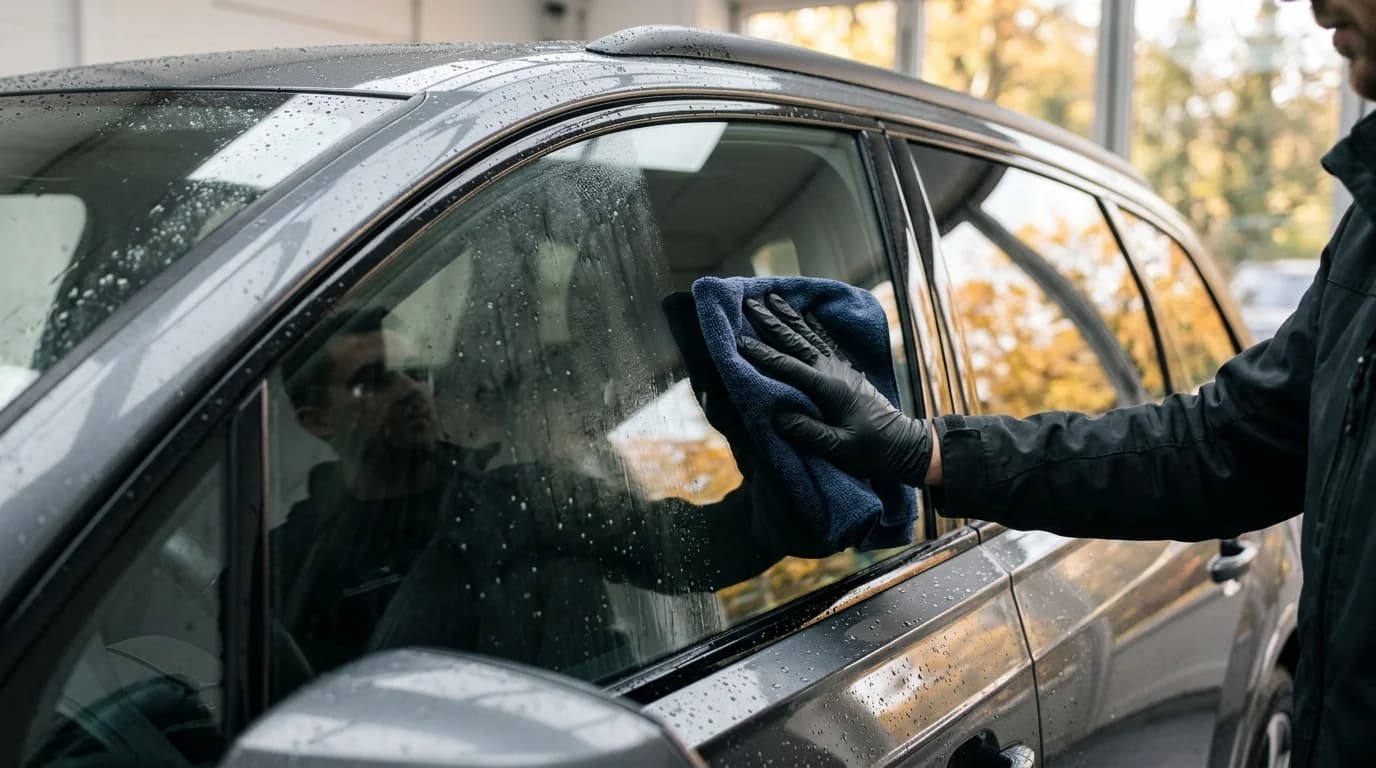
Clean glass is about more than looks. Dirty or streaky windows cut your view, and in autumn that matters. Low sun, wet roads and dark evenings turn a thin film on the glass into real glare. The good news is that streak free windows are easy once you know the method and use the right tools.
Why car windows streak in the first place
Streaks are almost always leftover residue. The usual causes are:
- Dirty or old towels that smear grime around instead of lifting it
- Too much product, which dries into a hazy film
- Cleaning in direct sun, so the product dries before you can wipe it off
- Household glass cleaners with ammonia or soap that leave a film
- Oily residue from interior plastics, hands and cooking style fumes
Car glass also collects things a house window never sees. Road film, traffic dust, wax overspray, tree sap and silicone from dressings all sit on the surface. Inside, the glass gets a greasy layer from plastics that slowly release oils, especially in warm weather.
What you need
You do not need much, but quality matters:
- Two clean microfiber towels made for glass (a waffle weave or low pile towel works well)
- One dry, soft microfiber for the final buff
- A dedicated automotive glass cleaner, ideally ammonia free and safe for tint
- A small soft brush or foam applicator for the edges
- A bucket of clean water for the outside, if the glass is very dirty
Use a fresh towel for glass only. If a towel has touched wax, tyre shine or dressing, it will smear glass no matter how well you wipe.
Step by step: the outside glass
- Work in the shade. Cool glass gives you time to wipe before the product dries.
- Wash first if the car is dirty. Do not use glass cleaner on gritty windows. Rinse and wash the glass with the rest of the car so you do not scratch it.
- Spray the towel, not the glass. This keeps overspray off paint and trim, and it gives you control over how much liquid you use.
- Wipe in one direction. Use straight overlapping strokes, for example left to right on the outside.
- Buff dry straight away with the second, dry towel. Use light pressure and turn the towel often.
A small trick that helps a lot: clean the outside in horizontal strokes and the inside in vertical strokes. If a streak remains, you immediately know which side it is on.
Step by step: the inside glass
The inside is where most people struggle, because of the oily film from the dashboard and seats.
- Lower the side windows a few centimetres and clean the top edge that hides in the seal.
- Spray the towel lightly and wipe the glass, reaching into the corners with a folded towel or a soft brush.
- Buff dry with a clean towel.
- For the windscreen, a glass reaching tool or a towel wrapped around your hand helps you get into the low corner near the dashboard.
Never spray directly onto the windscreen. The liquid runs onto the dashboard and electronics and can leave marks on plastics and leather.
Fixing stubborn film and haze
If the glass stays hazy after cleaning, the film is probably bonded to the surface. Regular cleaner will not remove it. Options are:
- A glass polish or a light glass clay treatment to lift bonded contamination
- Isopropyl alcohol diluted with water, wiped on with a clean towel, to cut oily residue on the inside
- Professional decontamination if the outside glass has water spots or mineral deposits that have etched in
Water spots on glass work like they do on paint. If they are left for months, they can etch the surface and only polishing will clear them.
Protect the glass to keep it clean longer
Once the glass is truly clean, a glass sealant or coating helps water bead and roll off. That improves visibility in the rain and makes future cleaning quicker. On a coated windscreen, wipers also glide more smoothly and dirt has a harder time bonding. Renew the treatment as the beading fades, usually every few months for a sealant.
Also replace your wiper blades at least once a year. Worn blades leave smears no cleaner can fix, and Dutch autumn weather puts them to work.
Common mistakes to avoid
- Using kitchen paper or newspaper, which leave lint and can scratch
- Using washing up liquid, which leaves a film
- Cleaning tinted film with harsh chemicals, which can damage it
- Wiping in circles, which spreads residue instead of removing it
- Reusing the same dirty towel for the whole car
When to call a professional
If your glass has deep water spots, a stubborn film, or you want the interior and exterior done properly in one visit, a detailer can save you time. At Dr. Detailer we come to your location in Alphen aan den Rijn and the surrounding area, and clean the glass as part of our interior and exterior detailing. We use eco friendly products that are safe for tint, seals and trim.
Quick summary
Work in the shade, use clean glass only towels, spray the towel and not the glass, and buff dry right away. Wipe in different directions inside and out so you can spot streaks fast. Do this before the dark days of autumn, and your view stays sharp all season.
More articles
Autumn Car Care Tips for Dutch Weather: Leaves, Damp and Grime
Practical autumn car care tips for Dutch drivers. Protect your paint from fallen leaves, tree sap, damp and road grime before winter hits South Holland.
The Two-Bucket Wash Method: Safe Car Washing at Home
Learn the two-bucket wash method to hand wash your car without swirl marks or scratches. A practical step-by-step guide for car owners in the Netherlands.