
How to Remove and Prevent Water Spots on Car Paint
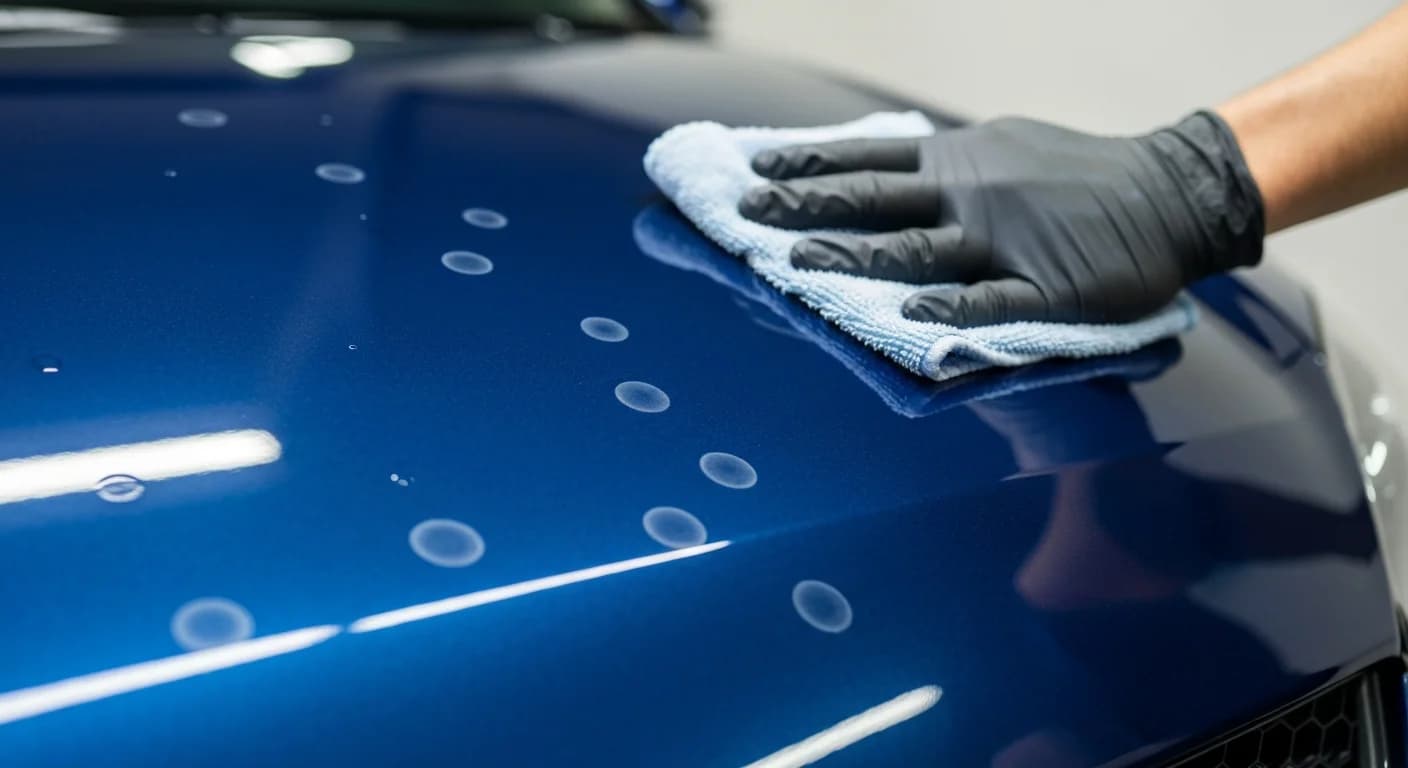
Few things are more frustrating than washing your car, letting it dry, and finding a constellation of cloudy white rings scattered across the paint. Those are water spots, and in the hard-water regions around Alphen aan den Rijn and the rest of South Holland, they appear faster than most owners expect. The good news: most water spots can be removed, and nearly all of them can be prevented once you understand what causes them.
What Water Spots Actually Are
A water spot is simply what's left behind when a droplet evaporates and the dissolved minerals it carried stay on the surface. They come in three levels of severity, and knowing which one you have tells you whether a quick wipe will fix it or whether you need correction work.
- Type 1 – Surface deposits: Mineral residue (mostly calcium and magnesium) sitting on top of the clear coat. These are the easiest to remove.
- Type 2 – Etching: When mineral-rich water dries on a hot panel, it can lightly burn a ring into the clear coat. You can usually feel these with a fingernail.
- Type 3 – Bonded staining: Long-neglected spots that have chemically bonded to the paint, sometimes mixed with industrial fallout. These almost always need machine polishing.
Why Dutch Tap Water Makes It Worse
Much of South Holland is supplied with moderately hard water — relatively high in dissolved calcium and magnesium. That's fine for drinking, but it's exactly what creates stubborn spots on paint and glass. The usual culprits are rinsing the car with a garden hose and letting it air-dry, lawn sprinklers misting the driveway, and summer rain landing on a sun-baked panel. In every case the water evaporates while the minerals stay behind and bake on.
How to Remove Fresh Water Spots
Type 1 spots can often be handled at home with a few minutes of care:
- Work in the shade on a cool panel — never in direct sun.
- Mix a 50/50 solution of distilled water and white vinegar in a spray bottle. The mild acidity dissolves mineral deposits without harsh chemicals.
- Mist it onto the affected area and let it dwell for 30–60 seconds.
- Wipe gently with a clean, plush microfiber towel — let the towel do the work, don't scrub.
- Rinse the area with clean water and dry with a second fresh towel.
A dedicated water-spot remover or a quality quick-detailer spray works just as well. Whatever you use, avoid pressing hard — aggressive scrubbing only trades water spots for swirl marks.
When the Spots Have Etched In
If the marks survive the vinegar treatment and you can feel a ridge with your fingernail, the minerals have etched into the clear coat. At this point you're in paint-correction territory: a clay-bar decontamination to lift bonded contaminants, followed by careful machine polishing to level the clear coat and restore gloss. This is delicate work — too aggressive and you thin the clear coat permanently — which is exactly why etched spots are best left to a professional with the right pads, compounds, and a paint-depth gauge.
How to Prevent Water Spots
Prevention is far easier than correction. A few habits make a big difference:
- Never wash in direct sunlight. Heat speeds up evaporation, so water dries before you can.
- Dry immediately. Use a clean microfiber drying towel or a soft silicone blade right after rinsing — don't let the car air-dry.
- Do a final rinse with filtered or distilled water when you can. Fewer minerals means fewer spots.
- Aim sprinklers away from the driveway and avoid parking under them.
- Apply a protective layer. A wax, sealant, or ceramic coating makes the surface hydrophobic, so water beads up and rolls off instead of clinging and drying in place — far fewer spots, and the ones that form wipe away easily.
Where Dr. Detailer Comes In
If your paint already shows etched spots, or you'd simply rather lock in long-term protection, our mobile team comes to your home or office anywhere around Alphen aan den Rijn — no need to find time for a detailing shop. We use eco-friendly, pH-balanced products throughout, our paint-correction service safely removes etched water spots and swirl marks, and a ceramic coating adds a durable hydrophobic layer that keeps spots from bonding in the first place.
Keep an eye on your paint, dry it promptly, and deal with spots while they're fresh — your clear coat will thank you for years to come.
More articles
How to Clean Car Windows Without Streaks: A Practical Guide
Learn how to clean car windows without streaks. Simple tips for inside and outside glass, the right products and tools, and what to avoid this autumn.
Autumn Car Care Tips for Dutch Weather: Leaves, Damp and Grime
Practical autumn car care tips for Dutch drivers. Protect your paint from fallen leaves, tree sap, damp and road grime before winter hits South Holland.