
Removing Pollen, Tree Sap & Bird Droppings: Spring Paint Care
Why Spring Is the Hardest Season for Your Car's Paint
Many car owners assume winter is the toughest time of year for vehicle paint. In reality, spring in the Netherlands brings a unique combination of threats that can quietly damage your clear coat in just a few weeks. Warmer temperatures, blooming trees, returning birds, and the first heatwaves create the perfect storm of contaminants that bond aggressively to automotive paint.
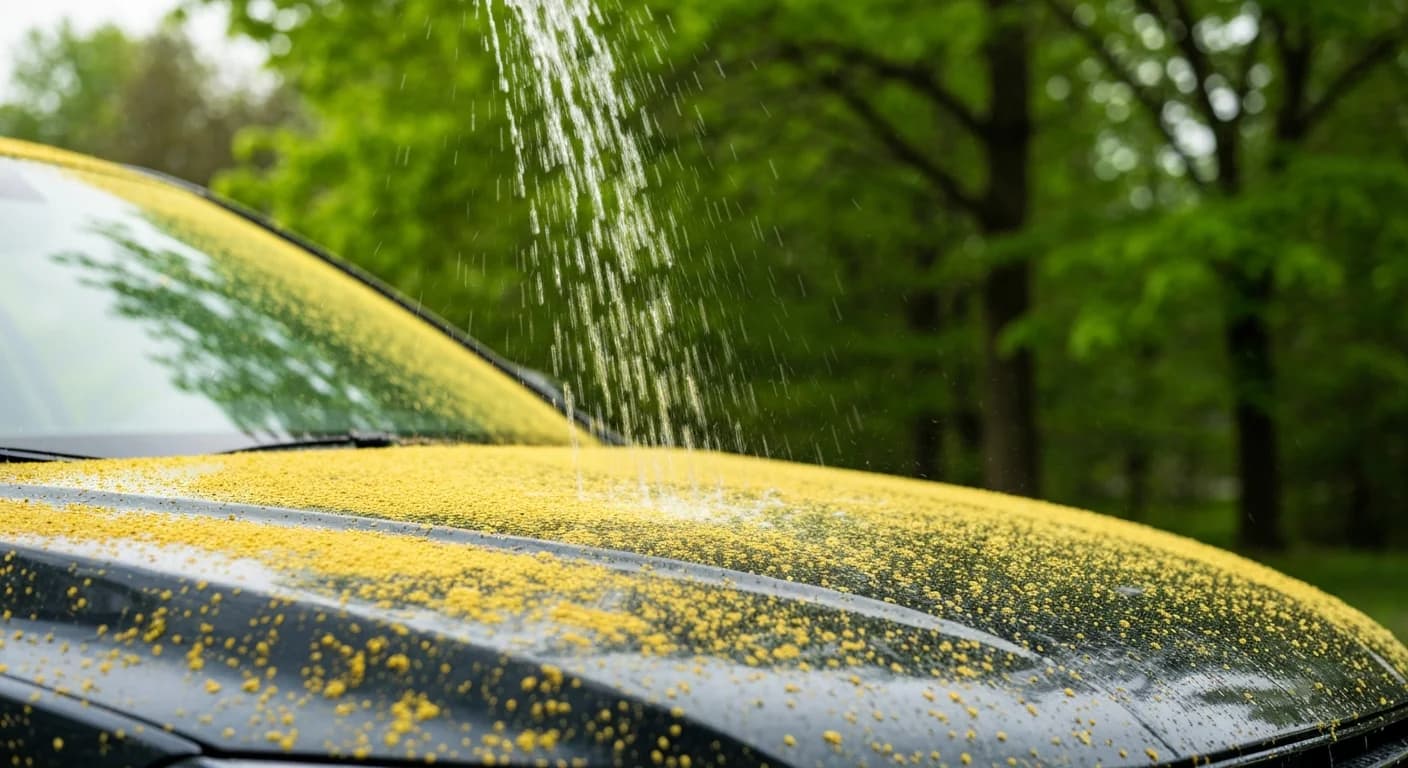
If you park outdoors anywhere between Alphen aan den Rijn, Leiden, or Rotterdam, you have probably noticed a thin yellow film on your bonnet by late April. That is only the beginning. Below we break down the three biggest spring threats and how to remove them without damaging your finish.
Pollen: More Than Just a Yellow Film
Pollen looks harmless, but it is mildly acidic. When morning dew or light rain mixes with pollen on your paint, it forms a weak acid that slowly etches the clear coat. Leaving it for a week is usually fine. Leaving it for a full pollen season is not.
How to remove pollen safely:
- Rinse the car thoroughly before touching the paint with anything. Dry pollen is abrasive, and wiping it with a dry cloth will scratch your clear coat.
- Use a pH-neutral car shampoo and the two-bucket method (one bucket for soap, one for rinsing your wash mitt).
- Work top to bottom in straight lines, not circles.
- Dry with a clean microfibre drying towel, not an old bath towel.
For cars parked under linden, oak, or birch trees in our region, weekly rinsing is more important than a deep monthly wash.
Tree Sap: The Silent Clear Coat Killer
Tree sap is one of the trickiest contaminants in spring. Once it hardens on your paint, it becomes very difficult to remove with standard car shampoo. Worse, sap can chemically bond to your clear coat within 24 to 48 hours in warm weather, leaving permanent etch marks.
Step-by-step sap removal:
- Wash and dry the affected area first.
- Apply a dedicated tar and sap remover or isopropyl alcohol (50% diluted) to a clean microfibre cloth.
- Lay the cloth on the sap spot for 30 to 60 seconds to soften it.
- Wipe gently in one direction. Never scrub.
- Re-wash the area with shampoo to neutralise the solvent.
- Re-apply wax or sealant to that spot, as solvents strip protection.
If the sap has been there for weeks, you may need a clay bar treatment or professional paint correction.
Bird Droppings: Act Within Hours, Not Days
Bird droppings are highly acidic and contain uric acid that etches directly into the clear coat. On a hot day, they can cause permanent damage in as little as two hours.
The right way to remove them:
- Keep a spray bottle of quick detailer and a few microfibre cloths in your boot.
- Spray generously to fully saturate the dropping. Do not wipe immediately.
- Wait at least 30 seconds for it to soften.
- Lift, do not drag, the residue with a clean section of microfibre.
- Inspect the spot in direct light. If you see a dull patch, the clear coat is already etched and may need polishing.
The Best Defence: A Protective Layer
The single most effective way to make spring detailing easier is to apply a protective coating before pollen and sap season begins. Three main options:
- Spray sealant — lasts 6 to 12 weeks, easy to apply, great for daily drivers.
- Synthetic wax — lasts 3 to 6 months, slightly more effort, deep gloss.
- Ceramic coating — lasts 2 to 5 years, professional application, maximum protection against acidic contaminants.
For customers in the Alphen aan den Rijn and wider South Holland area, Dr. Detailer offers all three at your home or office. Our mobile setup means you never have to drive your dirty car to a detailer, and we use eco-friendly products that are safe for your driveway and the canals.
A Practical Spring Maintenance Routine
If you want one simple rhythm to follow this season:
- Weekly: rinse the car with a hose to remove pollen and dust.
- Bi-weekly: full two-bucket wash with pH-neutral shampoo.
- Monthly: decontamination wash with iron remover and clay bar if needed.
- Once per season: apply or top up a protective sealant or ceramic coating.
Follow this and your paint will look better in October than it does today. Skip it, and you may be looking at paint correction by autumn.
When to Call a Professional
If you already see water spots that will not rinse off, dull patches where bird droppings sat too long, or a rough texture on the bonnet that feels gritty through a plastic bag, it is time for professional decontamination and paint correction. We are based in Alphen aan den Rijn and come to you, anywhere in South Holland, with everything needed to bring your paint back to life.
More articles
How to Clean Car Windows Without Streaks: A Practical Guide
Learn how to clean car windows without streaks. Simple tips for inside and outside glass, the right products and tools, and what to avoid this autumn.
Autumn Car Care Tips for Dutch Weather: Leaves, Damp and Grime
Practical autumn car care tips for Dutch drivers. Protect your paint from fallen leaves, tree sap, damp and road grime before winter hits South Holland.